
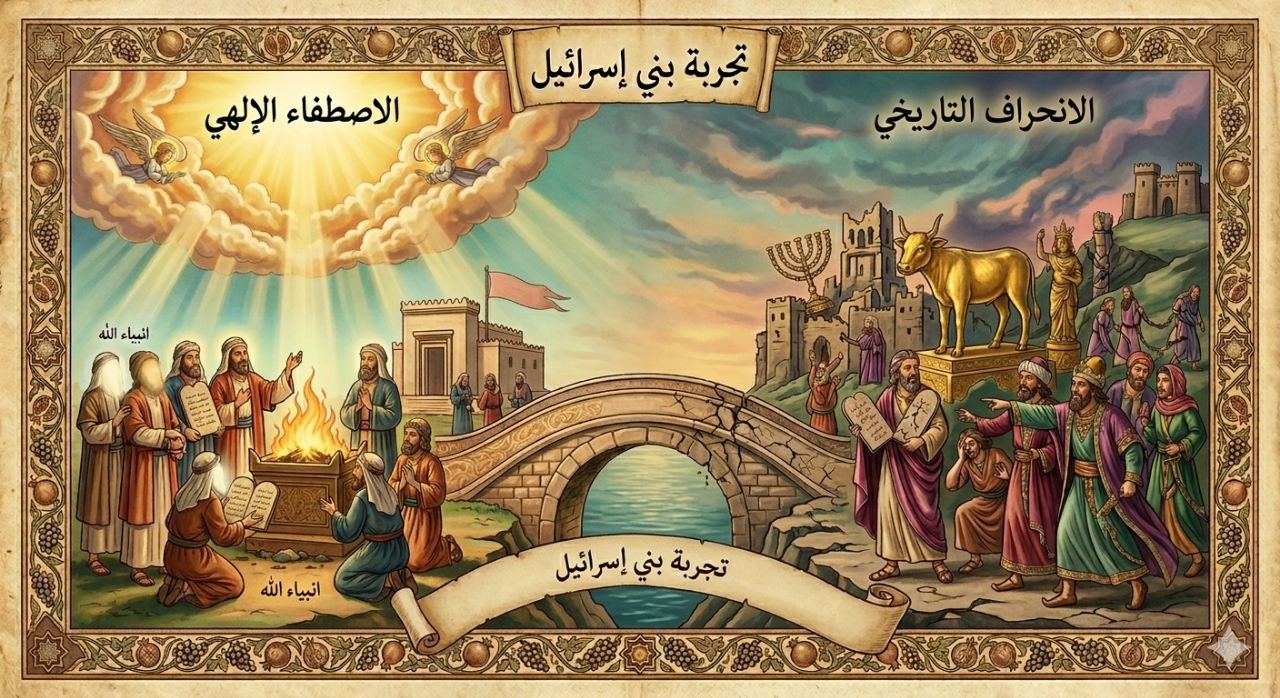
It explains that, from an Islamic perspective, Allah's selection is based on piety, good actions, and commitment to the covenant, rather than being a permanent racial preference. Allah, Almighty, granted the Children of Israel prophethood, the scriptures, blessings, and power to guide them, but their repeated errors, such as altering scriptures, breaking promises, worshiping the calf, and killing prophets,led to the loss of their status and resulted in Allah's anger. It also challenges the idea of the "chosen people," highlighting that true honor comes from faith and actions, not lineage. It points out that the highest form of selection is seen in the mission of Prophet Mohammad (peace be upon him), who brought a universal, lasting message that supersedes previous ones.
The research concludes that selection is both a moral and historical responsibility, and real distinction is achieved through piety and righteous deeds, not through national identity. Therefore, it emphasizes the contradiction between divine blessings and human mistakes, and how this has shaped the fate of nations, showing that privilege is lost when religious conditions are violated according to the Qur'anic perspective of religious history.


Comments