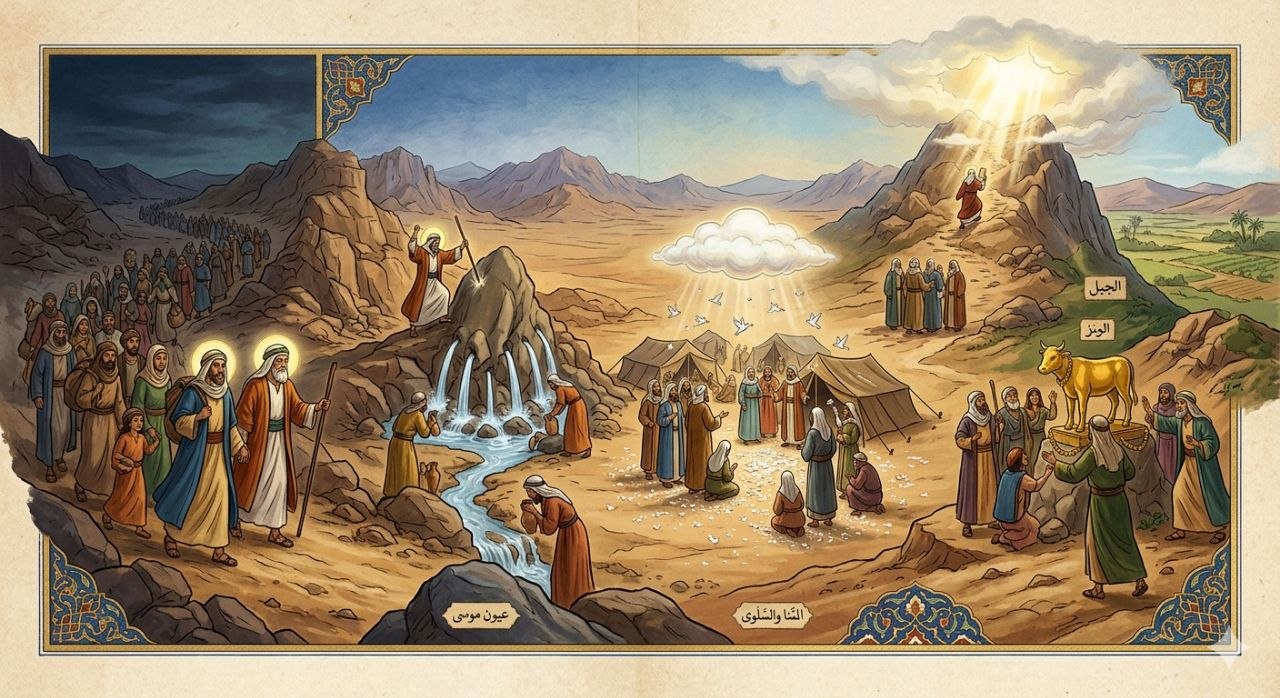

Rather, it points to broader Sunnah- based patterns governing the relationship between revelation and society, as well as between the prophetic message and the history. The Qur'an invokes the experience of the Children of Israel as a human case, through which key moral and historical dynamics can be explored, such as the principles of divine selection, the conditions that lead to deviation, the processes of moral and social decline, and the laws of replacement. Accordingly, the study of the Children of Israel moves beyond the limits of religious or political polemics and becomes an entry point to understand the historical trajectories of societies. It highlights how revealed messages may operate as sources of ethical and civilizational renewal, or conversely, how they may be reduced to instruments of justification when their moral foundations are lost.



Comments