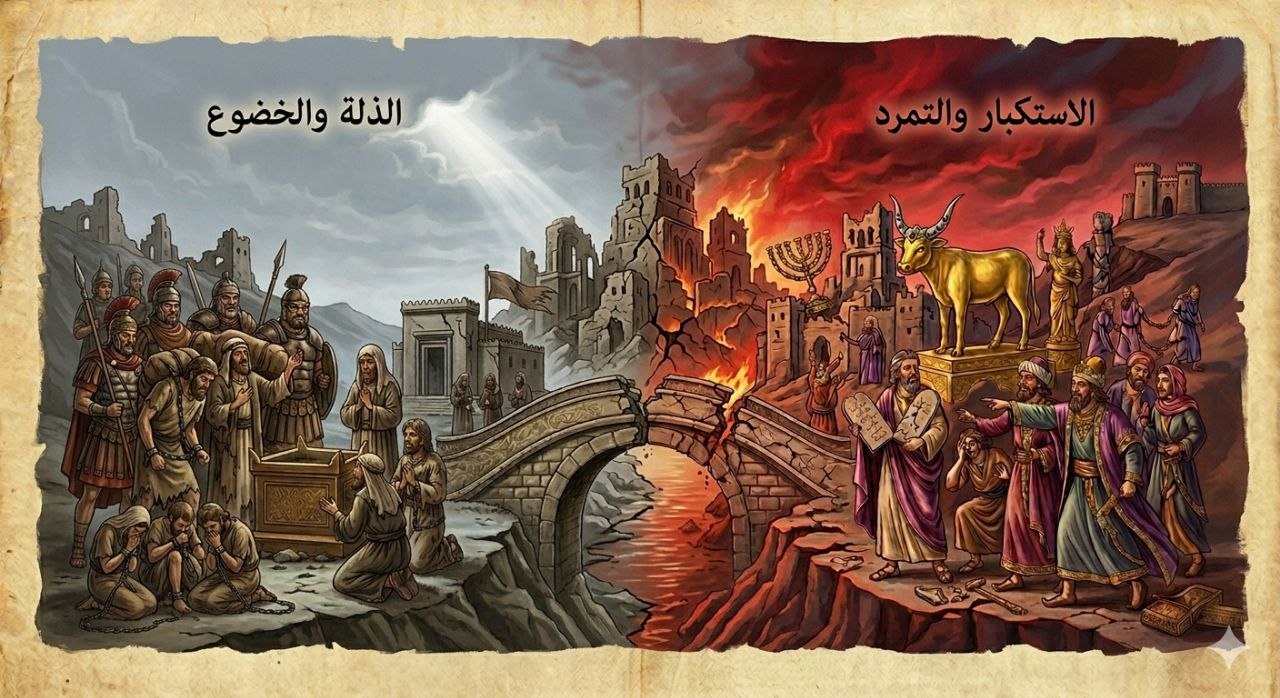
The first section focuses on the psychological and behavioral traits derived from the Qur'anic stories, emphasizing that this characterization does not deny the existence of righteous individuals who have deviated from this framework. The second section compares these traits to what the author perceives as their reflection in contemporary Israeli behavior. The research also calls for a revision of the common mythical images of Jews, distinguishing between religious reading and exaggerated ideological analysis. The research concludes that understanding this Qur'anic perspective, as proposed, provides a broader interpretive framework for studying collective behavior within its historical and religious context, without neglecting the human complexity and the multiplicity of social and political factors that contribute to the formation and transformation of societies over time. This makes the proposed analysis a tool for understanding religious discourse and its connection to contemporary reality in a critical and balanced manner, taking both the text and history into account, and aiming for a conscious reading that avoids absolute generalization while considering the complexity of human reality and the various factors influencing societal formation.



Comments